


The Science Behind Cartilage Regrowth Gels: How They Work, Their Limitations, and the Importance of Expert Orthopaedic Care
Introduction
Cartilage regrowth gels, often called hydrogels, are gaining attention as a hopeful solution for people living with joint injuries or early cartilage damage. These innovative treatments promise to support healing where the body’s natural repair mechanisms often struggle.
Articular cartilage—the smooth tissue covering the ends of our bones in joints—is vital for pain-free, effortless movement. Sadly, this cartilage has a very limited ability to repair itself if injured, which makes joint problems a persistent challenge in orthopaedics.
In this article, we'll explore how cartilage regrowth gels function, the limitations they currently face, and why maintaining realistic expectations is essential. We’ll also highlight the role of professionals like Professor Paul Lee from the London Cartilage Clinic, who combine scientific rigour with patient-centred care to deliver the best outcomes.
Understanding Cartilage and Why It’s Difficult to Repair
Articular cartilage acts like a shock absorber and a slick surface that lets our joints move smoothly. Unlike most of our tissues, cartilage has almost no blood supply. Without blood carrying nutrients and reparative cells, its ability to heal is severely restricted.
It’s also important to differentiate between hyaline cartilage—the strong, glassy tissue naturally lining healthy joints—and fibrocartilage, a rougher, scar-like tissue that often forms when the body tries to repair cartilage damage. Fibrocartilage isn’t as resilient, which means injuries often don’t heal fully or properly.
Because of these challenges, current gel-based treatments aim to bridge this natural healing gap by supporting the regrowth process where the body can’t do so effectively on its own.
How Do Cartilage Regrowth Gels Work?
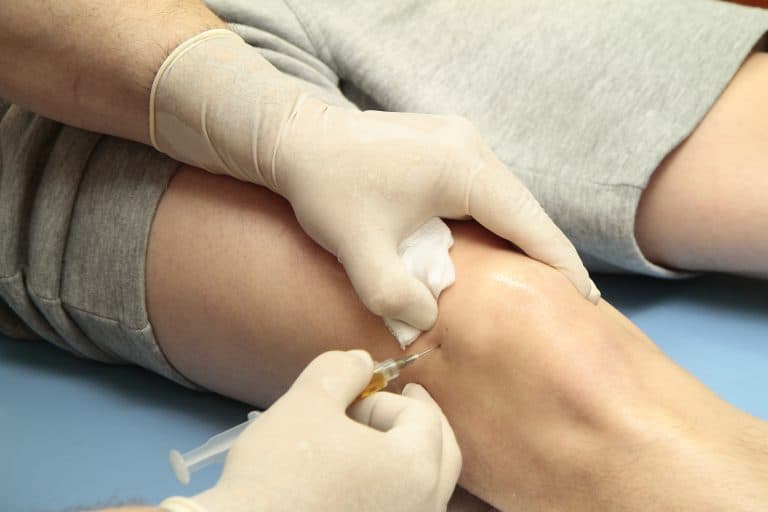
Think of cartilage regrowth gels as a type of biological ‘scaffolding’ temporarily placed into damaged areas of cartilage. These gels are usually injected or surgically implanted into the joint defect, where they act as a supportive framework.
This scaffolding encourages the body’s own cartilage cells—called chondrocytes—to move into the area and start rebuilding tissue. Often, these gels are infused with helpful substances like growth factors that further stimulate cell activity.
One recent study described these gels as “a resorbable filler based on type I collagen and a neutralising solution, used to form a protective layer around the cartilage defect while stimulating the growth of chondrocytes and the consequent induction of cartilage regeneration.”
Simply put, after being placed into the joint, the gel supports new tissue formation and gradually breaks down, ideally leaving behind improved cartilage.
Delivering these gels to certain joints can be tricky. For example, a recent technique involving the hip joint highlights the importance of precise application: “the distance between the tip of the needle and the area to be filled should be minimal to ensure full contact with the chondral lesion to avoid losing material inside the hip cavity and to increase the efficiency of the release of the product.” This shows that the success of these treatments often depends as much on how they are applied as on the material itself.
Free non-medical discussion
Not sure what to do next?
Information only · No medical advice or diagnosis.
Why Cartilage Regrowth Gels Aren’t a Magic Fix Yet
While early research and clinical use of cartilage gels are promising, they still face important limitations. The new tissue that forms often resembles fibrocartilage instead of the original hyaline cartilage, which means it may not be as durable or functional in the long run.
It is also sometimes challenging to achieve full and even coverage of the damaged area, and the gel must integrate well with the surrounding healthy cartilage—a process that isn’t always perfect. These issues become more complicated when the damage is widespread, as seen in advanced osteoarthritis.
As of 2024, reliably achieving full restoration of true hyaline cartilage using gel treatments alone remains beyond current capabilities. The process of cartilage regeneration is complex, and ongoing research is crucial.
Another important reminder from clinical experience is that “despite the developing technology, physical examination and clinical history are still the basic and low-cost diagnostic methods.” In other words, while new treatments are exciting, good medicine continues to rely on thorough patient assessment.

The Importance of Professional Care and Ongoing Research
Specialised orthopaedic centres, like the London Cartilage Clinic led by Professor Paul Lee, play a vital role in ensuring patients receive the right treatments with clear and honest communication. Their extensive clinical experience and evidence-based approach help patients navigate options safely.
Research continues to refine these hydrogel treatments. In one study, patients showed “an improvement in pain symptoms, associated with an increase in force in the pincer and grip movements evaluated with clinical tests” after treatment with a collagen-based gel. While encouraging, such findings also remind us that larger and longer studies are needed to fully understand how best to use these gels.
Ultimately, treatment decisions should always be personalised, guided by experienced clinicians who can tailor therapies to individual needs and conditions.
Conclusion: Hope and Honesty in Cartilage Treatment
Cartilage regrowth gels offer exciting potential for repairing joints and improving quality of life. Yet, they come with real scientific challenges and are not yet a complete solution.
By combining new technologies with expert care—such as that provided by Professor Paul Lee and the London Cartilage Clinic—patients can access treatments grounded in sound science and compassionate support.
If you are considering cartilage treatments, the best advice is to consult a qualified healthcare professional who can guide you through the options and what to realistically expect.
References
Corain, M., Zanotti, F., Giardini, M., Gasperotti, L., Invernizzi, E., Biasi, V., & Lavagnolo, U. (2023). The use of an acellular collagen matrix ChondroFiller® Liquid for trapeziometacarpal osteoarthritis.
Frequently Asked Questions
- Cartilage regrowth gels, or hydrogels, serve as biological scaffolding in damaged joints. These gels encourage the body’s own cartilage cells to regenerate tissue, offering hope for those with early cartilage injuries when traditional healing is limited.
- Cartilage has almost no blood supply, which greatly restricts its ability to heal naturally. This lack of nutrients and reparative cells means injuries often do not repair properly, making joint problems a persistent challenge for patients and specialists alike.
- While promising, cartilage regrowth gels often lead to the formation of less resilient fibrocartilage instead of original hyaline cartilage. Coverage may be uneven, and integration with healthy tissue varies. Full restoration with gels alone remains beyond present medical capability.
- The London Cartilage Clinic, led by Prof Paul Lee, combines advanced technology with a patient-focused approach. Prof Lee’s extensive expertise and rigorous scientific methods ensure patients receive tailored, evidence-based care for the best possible cartilage treatment outcomes.
- Professor Paul Lee is a respected Cartilage Expert and Regional Surgical Ambassador, with advisory roles at the Royal College of Surgeons of Edinburgh. His experience in advanced cartilage repair makes the London Cartilage Clinic a leader in innovative joint care.
Legal & Medical Disclaimer
This article is written by an independent contributor and reflects their own views and experience, not necessarily those of London Cartilage Clinic. It is provided for general information and education only and does not constitute medical advice, diagnosis, or treatment.
Always seek personalised advice from a qualified healthcare professional before making decisions about your health. London Cartilage Clinic accepts no responsibility for errors, omissions, third-party content, or any loss, damage, or injury arising from reliance on this material.
If you believe this article contains inaccurate or infringing content, please contact us at [email protected].
London Cartilage Clinic
Modern treatments, designed for lasting knee outcomes
Every treatment plan is selected to help you return to the quality of life you deserve. Our team combines up-to-date techniques with consultant-led decision making across cartilage repair, regeneration and replacement.
What your journey can look like
Step 01
Consultant-Led Assessment
Symptoms, imaging and goals reviewed in one structured appointment.
Step 02
Personalised Treatment Plan
A clear route chosen from repair, regeneration or replacement options.
Step 03
Precision Delivery
Modern techniques and specialist equipment matched to your diagnosis.
Step 04
Long-Term Knee Health
Follow-up guidance focused on durable function and quality of life.
PAAG-8+ Questionnaire
A bright, structured entry point for patients exploring Arthrosamid. The questionnaire helps frame suitability, expectations, and 24-month clinical benefit discussion before a fuller consultant-led review.
Designed for shared decision-making. It does not replace specialist consultation, examination, imaging review, or formal medical advice.